Yakima Valley, Washington by Brian Smith
It’s nearly 6pm when we roll into Yakima and I already hate it. The last 30 hours have been disastrous and Yakima looks exactly like Wenatchee, which looks exactly like Ellensburg, which looks exactly like every other part of Washington we’ve been to once we got past Spokane. When I think Washington, I’ve imagined dense, verdant forests climbing up the steep sides of craggy mountain faces, like somewhere the Elves would live in a Tolkien novel, but instead it looks like the flatlands of Texas, filmed in sepia, yet I’m somehow always driving up a hill. Also, it is on fire. I’m getting air quality notifications on my phone every hour on the hour. I booked this particular RV park because there were supposed to be majestic views of Mt. Rainier, but as it turns out you can only see the peak and only on the clearest of days.
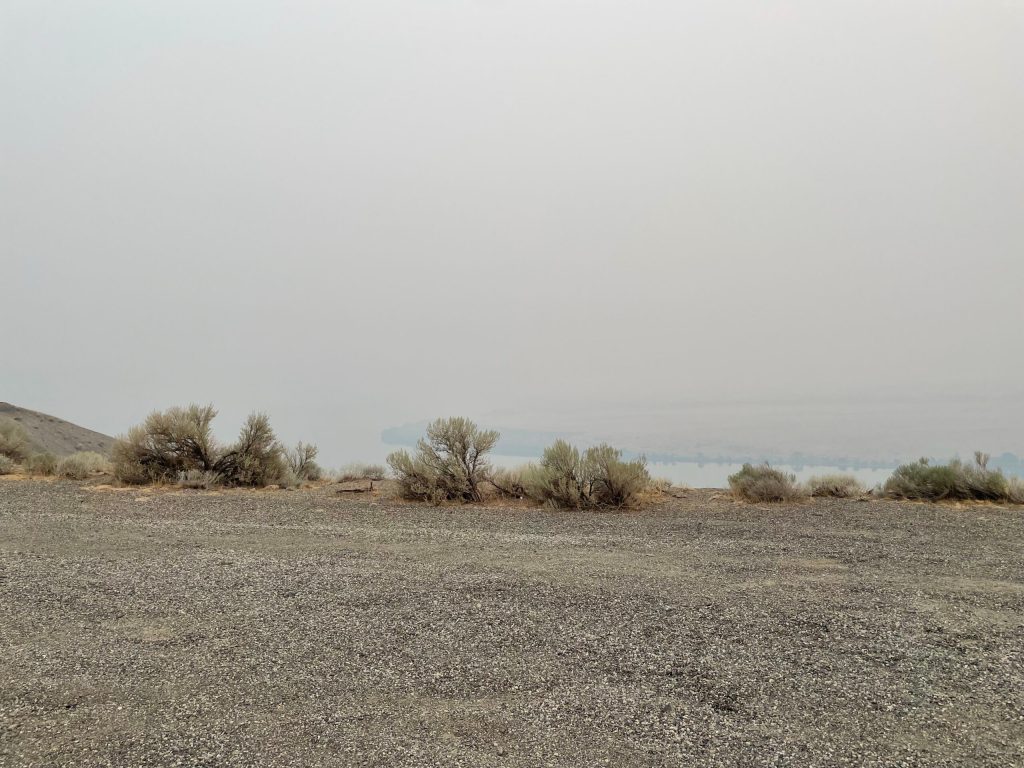
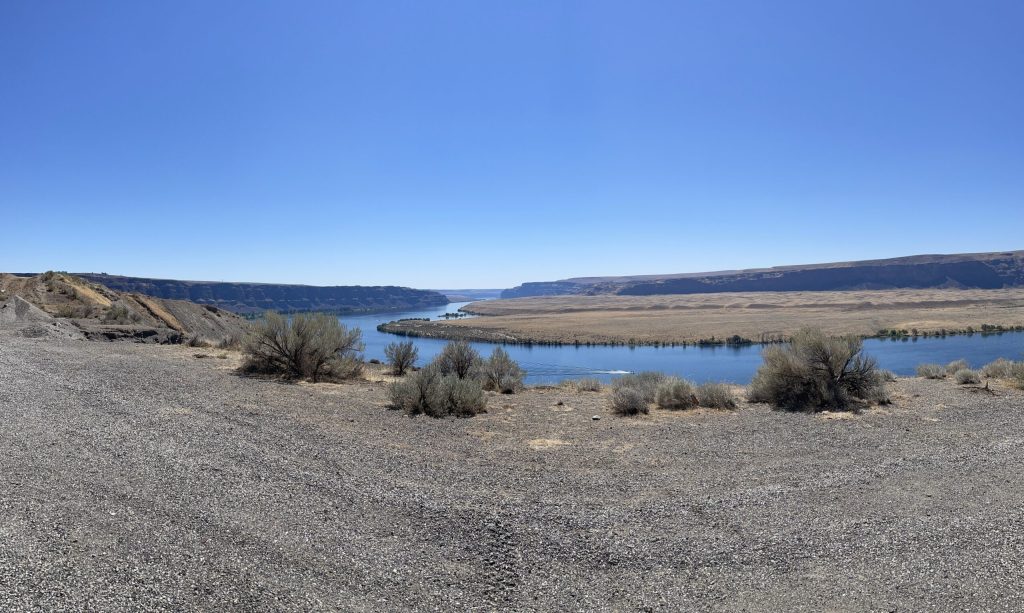
Columbia River before and after smoke
The next morning I’m a little less on edge and ready to drink some fermented bread juice. I start off by going to a fruit farm and buying 4 kinds of nectarines. Then I go to a coffee shop (as in all of Washington state, coffee houses actually outnumber the citizens roughly 4 to 1). As an aside, there is a lot of good coffee in Washington. I went to a place called MAK Daddy, and besides the stupid name, it was excellent. I had a black pepper and dark chocolate latte, and ate my nectarines while I made some calls to a few hop growers.
On the Yakima city website, they have many resources for people like me who want to check out the brewing scene. They have an entire page talking about Yakima Chief Hops offering tours of their farms and processing facilities. Just call this number to schedule a tour. Well, I called that number and the lady who answered said that they have never done tours. Undeterred, I asked if I could have a tour anyways. I mentioned that I was visiting from New Orleans where I am a former officer and probable member of The Crescent City Homebrewers, and that I wanted to write an article for the newsletter. In addition, I write for a popular beer brewing blog called Crescent City Brew Talk. She said she would have someone call me back. Lo and behold the president of product development called me back and said that he had set up a tour for me for next week. I told him I really appreciated it, but I would be gone next week. He then said he was going to call some folks and see if I could just stop in and check some things out, and he did.
First stop on his list was Bale Breaker, a brewery that recently celebrated its tenth anniversary. Bale Breaker was built on a farm where they produced barley, wheat and hops. Just two months before my visit they made their last beer with grains they grew and were now buying their grains and only growing hops. I met a farmer there named Jake, who interestingly enough was not a farmer there, but at another Yakima Chief farm. He took me out into the fields and showed me the hops which were literally a week away from being picked. He explained the picking process whereby a specialized machine is run up and down the hop fields and the entire bine is fed into the machine. The machine shears the hops and leaves off of the bine and then they are mostly separated by a shifting filter that shakes the leaves out of the hops. According to Jake, there are only a dozen or so of these machines and all the farms, regardless of who owns them, share the machines and the costs for maintenance and repair. I asked why a giant, literal, global company like Yakima Chief wouldn’t have their own and he just shook his head and said “It’s just been this way since the 70s”. He then went on to fill me on how just how much farmers help each other out. Even farmers growing for different companies will help each other out with yields if they are able. Then he told me about the giant snow storm in ’92 where the accumulated snow caved in all of the warehouse roofs in Yakima. After this most informative tour we grabbed some delicious tamales at the visiting food truck and went inside to have a few beers. We started with Topcutter, their most popular IPA. It was surprisingly dank and I definitely knew I was on the west coast. Then we tried a bunch of other beers including an IIPA, IIIPA, IPL, Hazy IPA, Fruited IPA, Hoppy stout, and a hopped sour. It occurs to me that if you have acres of hops surrounding your brewery, you may as well make some hoppy beers.
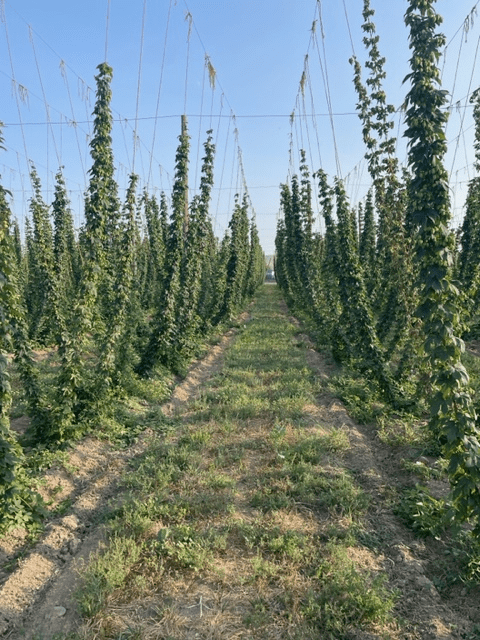

Bale Breaker
Next up, I went to Single Hill Brewing. The owner of this brewery had been in R&D for Yakima Chief, and he had been told (warned?) I was coming. Really not too much to add here in terms of hops. They did grow some of their own hops, but only enough to account for several special brews per year. One thing I did learn from him was that good hops require long days. If you have good growing conditions, but shorter days, like we do in La., your hops will grow, but won’t develop the alpha and beta acids that make hops hoppy. Then he told me about the giant snowstorm of ’93 that caved in all of the warehouses. Afterwards we had some great brews. Like Bale Breaker, they seem to focus on IPAs. Their most popular IPA is called Lateral A and utilizes and experimental hop called “orange creamsicle”. The name refers to a road in one of the largest hop farms in the area (more on that later). I enjoyed all of their beers, but my favorite was a Japanese style lager. After the tour as I was sitting at the bar, I struck up a conversation with a Yakima Indian named Low Stick Nick. I asked him how he got that name and he said that when he was born his parents measured him against a stick that they had measured his older brother against, and he was shorter. I said why not Short Stick Nick and he said his parents didn’t want to make it sound like he had a small wiener. Aho.
I had a couple more Yakima Chief approved activities on my itinerary, but I decided to check out a few breweries on my own. First up was 5th Line Brewing, which was in a strip mall between an outdoor outfitter (also outnumber Washington citizens 4 to 1) and a trampoline park. They were closed when I got there, but let me in anyways because I must have looked sad. I told Nate, the brewer/owner, that in New Orleans we have a Second Line Brewery, so I’m curious what the 5th Line is. He said it had something to do with Hockey at which point I tuned out. 5th Line had a large assortment of beer styles including a perfect ESB and a refreshing Tripel. I tried all of the beers they had on offer, and got to try a few special beers only for special people like me. Despite all of the hockey stuff, which I am genetically predisposed to not understand, I would say that 5th Line Brewing was my favorite brewery in a town that’s full of above average breweries.
My second deviation was a small brewery named Wandering Hop. They had 7 beers on tap and served a flight of 6 beers. I chose to skip the Citra IIPA. All of the beers were good, but my favorite was the spruce tip beer ‘Trippin on 44s’. I told the brewmaster (Shane?) how much I liked it, and he told me that there’s a secret society in Yakima that goes on a camping trip every year when the new spruce tips start to grow. They all take various hallucinogenic drugs and pick spruce tips and then they make a 50-gallon batch of spruce tip beer using river water and a bonfire. This is not that beer, but this beer was made with spruce tips from that trip. I told him that while I very much want to believe this, I think he’s just fucking with me. He said he swears to God that it’s the truth and called his assistant brewer to have him verify the story. The assistant picks up but whispers very loudly “I’M SORRY I CAN’T TALK RIGHT NOW I’M SHOOTING ANOTHER RAP VIDEO” and hung up. Then Shane (?) started complaining about his brewer’s rap career and eventually told me about the huge snowstorm of ’91 that busted all of the warehouse roofs in Yakima. Once again, I was pleasantly surprised by the quality of the beers and wouldn’t hesitate to recommend
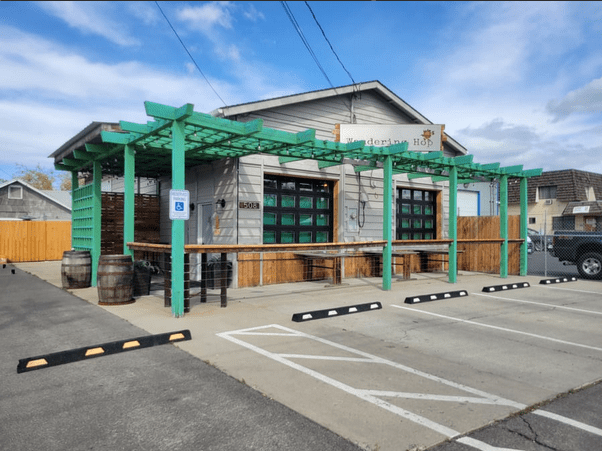
Wandering Hop
Back on to the officially sanctioned Yakima Chief beer tour, my penultimate destination was Bron Yr Aur which is just outside of Yakima and pretty close to the RV park I was staying in. This place was neat. It’s built on a farm that grows a little of everything; sitting on the back porch you can see a pear orchard, some hops, some pumpkins and some corn. I was told they expected me, but no one seemed to know what I was talking about which is always a fun way to start a conversation, but once I did a little name dropping they decided to decided to show me a couple of interesting things. One thing is that they utilize koelschips or coolships for some of their beers. Coolships are long stainless steel (back in the old days they were wood) lidless boxes that they pump the wort into in order to cool it. Many traditional breweries still do it this way, but Bron Yr Aur takes it a step further. Their coolships are on wheels and linked together and using a tractor they drag them all over the farm collecting all kinds of yeasts and other bugs to inoculate the wort. I tried one of the beers they made utilizing this method, their Saison and it was incredible. Their most popular beer, the Beaver Deceiver Cream Ale was indeed creamy and thirst quenching. Really, all of the beers were top notch, and the pizza was pretty good too.
The last stop on my hop-growing tour that Yakima Chief helped set up was Perrault Farms. This is a family run hop farm that is contracted to Yakima Chief. They have been farming in this area since 1900 and planted their first hops in the 1920s. Located off of Lateral A road in Toppenish WA, the farm is absolutely beautiful with a view of Mt. Rainier far off in the distance, and a herd of bison wandering along the slopes of the bluffs that surround it. I met with Jason Perrault, the great great grandson of the couple who started the farm. He didn’t tell me, but I found out later that it was his team that created Citra, Mosaic, and Ekuanot. Jason is the CEO of Perrault farms. I tried to explain to him that I am not some influencer that is going to make his farm go viral or anything, I’m just some guy who likes beer and happens to belong to a brewing club, and I’m not even sure if I’ve paid my dues this year. He said he really likes meeting with brewers, no matter how much they brew and he’d be happy to show me around. We went into the fields and checked out Citra, Tomahawk, and Talus crops. He also pointed out the blueberry crops and the bison conservation project which was the fulfillment of a dream his grandfather had. Jason explained that the reason hops grow so well in this area is not just the long days and the volcanic soil, but also the fact that it is a desert. Hops are prone to many diseases that come with moisture and humidity, and being in a desert allows them to monitor and control the irrigation of the hop fields. They not only grow and harvest the hops, but they also have the processing equipment to make hop pellets, but very little of their product ends up turned into pellets anymore. Yakima Chief has been instrumental in developing Cryo Hops, which they process at their facilities that I could not get in to. Cryo techniques allow more flavor to be imparted with less hops, which means you lose less beer to hop particulate. As home brewers we may lose a pint or so, but when you’re brewing 10 barrels you’re losing a lot of product, so Cryo Hops are definitely worth the investment. After the fields we went to the warehouse where they store the hops and it smelled amazing. It smelled the way that I had been hoping that the fields would smell. Just knock you on your ass hoppiness. Then we tried a couple of beers. They have an in-house brewing system that they use to test their hops – always following the same grain bill, just switching out the hops. Jason had to go, but left me with a couple of brewers who have been working at Perrault farms over a decade each. They both love the work and passionately talked about the connection between the land and the quality of craft beer. I would love to throw some quotes in here, but I must have had about 5 pints at this point and just remember feeling inspired to brew a hoppy beer. If you visit Yakima, and you like beer at all, you need to check out Perrault Farms.


Perrault Farms
On my last day in Yakima I decided to expand my horizons a little bit and drink some cider. A couple of brewers had mentioned Tieton Cider Works, so I made my way there. As it turns out, Tieton Cider works also brews beer, so I wound up drinking beer. A lot of beer as it turns out. They have 6 beverages on tap, 3 ciders and 3 beers. They have a flight that lets you taste all of them. Perfect. All of the ciders and beers were good. One of the ciders had habanero in it, which I know from practice will give me heartburn, so I only had a sip of that one, but it was very tasty. As I’m enjoying my flight a guy comes in throwing off some major Tom Bombadil vibes. He had a grey beard down to his waist, was carrying a box of vinyl records, and had a hat that looked like it was made from a lily pad. He sat down next to me and started talking to the bar-tender Ahryn (pronounced Aaron) and it was clear that this guy was good friends with the owners or maybe an owner or was somehow related to the brewery side of things. I told him I was in town trying beers yada yada and he asked what my favorite beers had been so far. I mentioned the spruce tip beer at Wandering Hop and he suddenly got really excited. He told me that he started a tradition of brewers going out into the woods and taking hallucinogenic drugs, picking spruce tips and brewing a 50-gallon batch with river water and a bonfire. He started it in the early 2000s and by 2010 most of the major breweries in town were somehow involved. Ahryn had been going since 2018 and when Tom Bombadil (I never got his actual name, so I’ll just go with this) asked him if he had any of the beers; he immediately produced 3 from under the counter. There was a spruce sour from 2019, a spruce stout from 2021 and a spruce wheat wine from 2022. Tom said “Let’s give them a taste” and Ahryn immediately popped them open and we started trying them. I was beyond impressed; all of them had that almost cola like spruce property, but were still extremely varied and interesting. I said that of the 3, the stout was my favorite because it was the most unusual spruce tip beer I had tasted. Tom said he didn’t care for it because he had made a much better one several years before. Eventually Tom got up to leave and Ahryn asked him if he wanted to pay for his drinks, I told him to put them on my tab and Tom thanked me and then told Ahryn to give me an open tab. I know that’s confusing. Several hours passed and I was getting ready to call it an evening when Tom showed up again holding a bottle of spruce tip stout from 2015. We cracked it open and maybe I had just had too much to drink, but it tasted more or less like the one from ’21. Either way it was very good and I couldn’t believe he went home and got one just for me to taste. By now it was 10 pm and the cider works was closed. We all went into the parking lot and discovered that someone left a weird drawing of Bigfoot on my truck. Tom laughed and said it’s good luck.
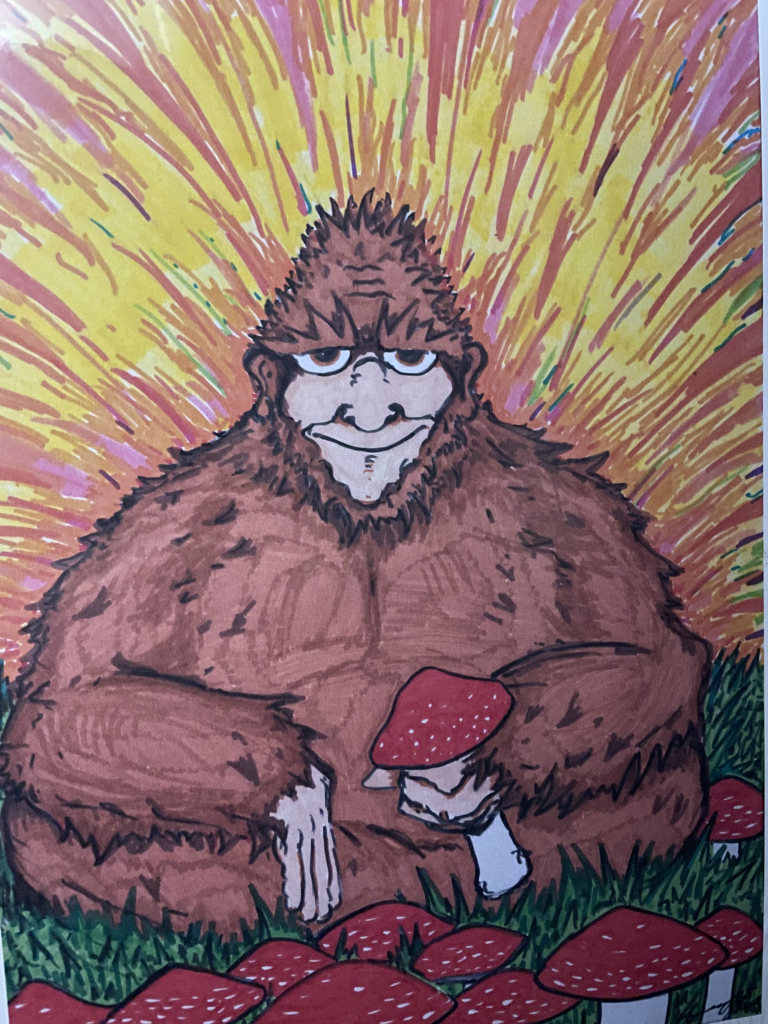
Big Foot
The next morning I was very sad to leave Yakima. It’s a city where everyone is proud of the contributions they make to the art of brewing. I think that the bar is set so high for breweries that only exceptional breweries will survive there. I’d like to go back and try the couple of places I missed, but I’d also like to spend some more time with the farmers, and maybe next time I can give Yakima Chief enough heads up that I can take a peek at their processing facility.
 Crescent City Brew Talk